Calories in nuts and dried fruit: dates, almonds, cashews, pistachios
According to USDA FoodData Central, one Medjool date of 24 g without the pit provides about 66 kcal and a 30 g handful of almonds about 174 kcal, calculated values. Here are the USDA FoodData Central figures for nine nuts and dried fruits, per 100 g and per serving, with no health promises.
Calories in Medjool dates: per 100 g and per date
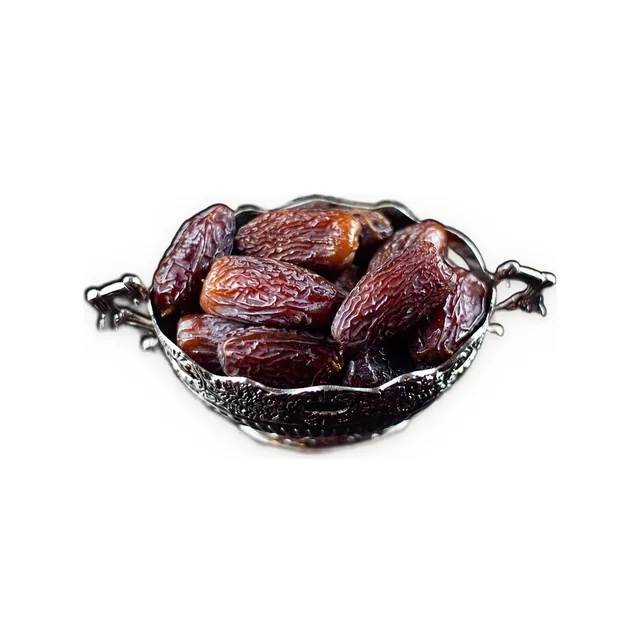
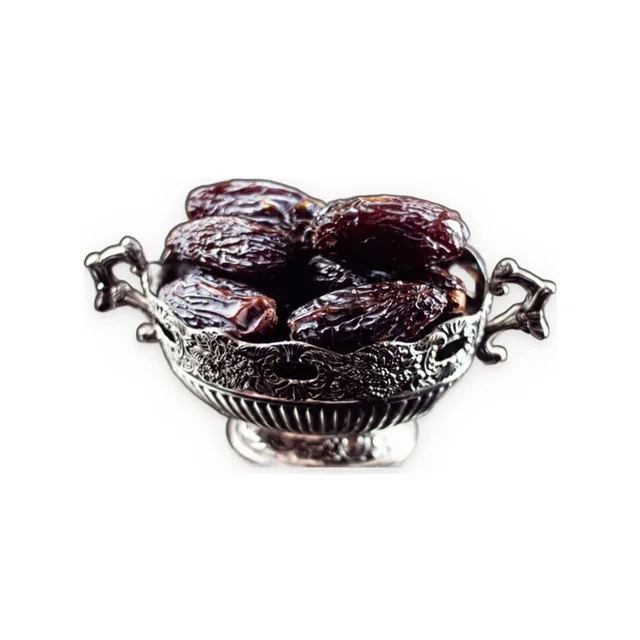
Medjool dates (tmer mejhoul) provide 277 kcal per 100 g of pitted flesh according to USDA FoodData Central, or about 66 kcal for one date of 24 g without the pit, the weight the USDA uses for a Medjool, a calculated value.
Per 100 g: protein 1.81 g, fat 0.15 g, carbohydrates 75.0 g (including sugars 66.5 g), fiber 6.7 g. For one 24 g date, by calculation: protein 0.4 g, fat less than 0.1 g, carbohydrates 18.0 g (including sugars 16.0 g), fiber 1.6 g. For dates with no variety specified, the generic USDA FoodData Central entry, calculated from Deglet Nour, gives 282 kcal per 100 g of pitted flesh. See our Large Medjool dates and our Jumbo Medjool dates.
Medjool, Ajwa, Sukari: which date to choose?
Calories in almonds: 100 g, a handful, 20 almonds
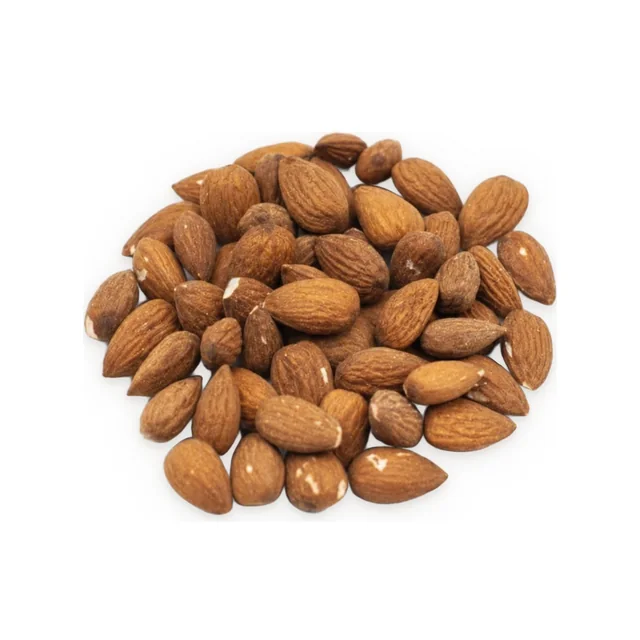
Almonds (louz) provide 579 kcal per 100 g according to USDA FoodData Central (unroasted almonds), or about 174 kcal for a 30 g handful, a calculated value.
Per 100 g: protein 21.2 g, fat 49.9 g, carbohydrates 21.6 g (including sugars 4.35 g), fiber 12.5 g. Per 30 g, by calculation: protein 6.4 g, fat 15.0 g, carbohydrates 6.5 g (including sugars 1.3 g), fiber 3.8 g.
The USDA counts 1.2 g per almond: 20 almonds therefore weigh about 24 g and provide about 139 kcal, 5.1 g of protein, 12.0 g of fat and 3.0 g of fiber, by calculation. See our Standard almonds and our Forna almonds from Meknes.
Calories in cashews: raw or roasted
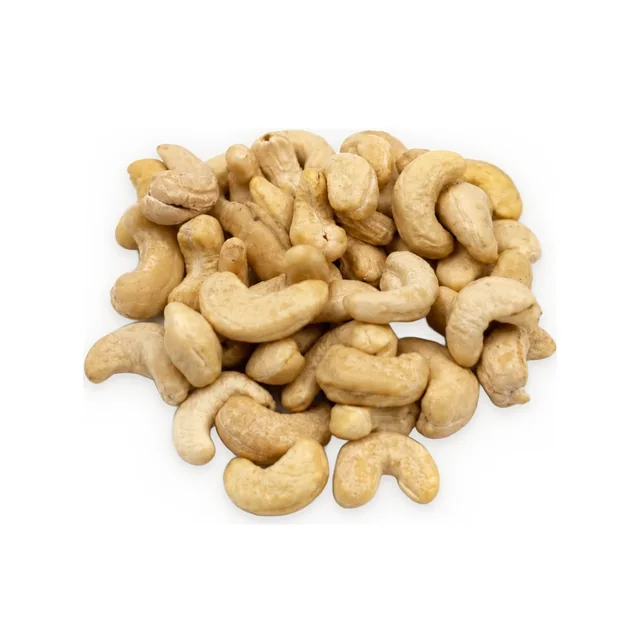
Cashews (kajou) provide 553 kcal per 100 g raw, according to USDA FoodData Central, or about 166 kcal for a 30 g handful, a calculated value; dry-roasted without salt, 574 kcal per 100 g, or about 172 kcal per 30 g.
Per 100 g, raw: protein 18.2 g, fat 43.8 g, carbohydrates 30.2 g (including sugars 5.91 g), fiber 3.3 g. Per 30 g, by calculation: protein 5.5 g, fat 13.1 g, carbohydrates 9.1 g (including sugars 1.8 g), fiber 1.0 g. See our Raw cashews and our Roasted unsalted cashews.
Calories in pistachios: unsalted or salted
Pistachios (fostok) roasted without salt provide 572 kcal per 100 g of shelled pistachios according to USDA FoodData Central, or about 172 kcal per 30 g, a calculated value.
Per 100 g: protein 21.0 g, fat 45.8 g, carbohydrates 28.3 g (including sugars 7.74 g), fiber 10.3 g. Per 30 g (43 to 52 shelled pistachios, depending on which USDA measure is used), by calculation: protein 6.3 g, fat 13.7 g, carbohydrates 8.5 g (including sugars 2.3 g), fiber 3.1 g.
Roasted and salted, pistachios come to 569 kcal and 428 mg of sodium per 100 g of pistachios without the shell according to USDA FoodData Central, against 6 mg of sodium for unsalted roasted pistachios. See our Roasted unsalted shelled pistachios and our Roasted salted pistachios.
Calories in walnut halves
Walnut halves (kerkaa) provide 654 kcal per 100 g according to USDA FoodData Central, or about 196 kcal for a 30 g handful, a calculated value.
Per 100 g: protein 15.2 g, fat 65.2 g, carbohydrates 13.7 g (including sugars 2.61 g), fiber 6.7 g. Per 30 g (about 15 halves), by calculation: protein 4.6 g, fat 19.6 g, carbohydrates 4.1 g (including sugars 0.8 g), fiber 2.0 g. Walnut halves have the lowest sugar figure in this guide.
Calories in pecans
Pecans (bakan) dry-roasted without salt provide 710 kcal per 100 g according to USDA FoodData Central, or about 213 kcal for a 30 g handful, a calculated value: this is the highest figure in this guide.
Per 100 g: protein 9.5 g, fat 74.3 g, carbohydrates 13.6 g (including sugars 4.06 g), fiber 9.4 g. Per 30 g, by calculation: protein 2.9 g, fat 22.3 g, carbohydrates 4.1 g (including sugars 1.2 g), fiber 2.8 g. See our Roasted unsalted shelled pecans.
Calories in raisins
Raisins (zbib) provide 299 to 301 kcal per 100 g according to USDA FoodData Central (299 kcal for the generic entry, 301 kcal for seedless golden raisins), or about 90 kcal per 30 g, a calculated value.
Per 100 g of golden raisins: protein 3.28 g, fat 0.2 g, carbohydrates 80.0 g (including sugars 65.7 g), fiber 3.3 g. Per 30 g, by calculation: protein 1.0 g, fat 0.1 g, carbohydrates 24.0 g (including sugars 19.7 g), fiber 1.0 g. See our Unsweetened golden raisins and our Unsweetened jumbo raisins.
Calories in dried figs
Dried figs (chriha) provide 249 kcal per 100 g according to USDA FoodData Central, or about 75 kcal per 30 g, a calculated value.
Per 100 g: protein 3.3 g, fat 0.93 g, carbohydrates 63.9 g (including sugars 47.9 g), fiber 9.8 g. Per 30 g, by calculation: protein 1.0 g, fat 0.3 g, carbohydrates 19.2 g (including sugars 14.4 g), fiber 2.9 g. See our Spanish dried figs and our Unsweetened Turkish dried figs.
Calories in dried apricots
Dried apricots (mechmach) provide 241 kcal per 100 g according to USDA FoodData Central, or about 72 kcal per 30 g, a calculated value: this is the lowest figure in this guide.
Per 100 g: protein 3.39 g, fat 0.51 g, carbohydrates 62.64 g (including sugars 53.44 g), fiber 7.3 g. Per 30 g, by calculation: protein 1.0 g, fat 0.2 g, carbohydrates 18.8 g (including sugars 16.0 g), fiber 2.2 g. See our Unsweetened dried apricots.
What does “no added sugar” mean on dried fruit?
“No added sugar” on dried fruit means that no sugar has been added to the fruit: the fruit's own sugars remain.
In the European Union, Regulation (EC) No 1924/2006 reserves “with no added sugars” for products with no added monosaccharides or disaccharides, nor any other food used for its sweetening properties, and “sugars-free” for products with no more than 0.5 g of sugars per 100 g: no food in this guide is below that threshold. At Maison Fakya, “unsweetened” is the label some dried fruits in our catalog carry: it means no extra sugar has been added to them.
Nuts: what does the official French recommendation say?
Santé publique France (France's public health agency) recommends, on its Manger Bouger website, eating “a small handful a day of unsalted nuts (and unsweetened, without chocolate)”, naming walnuts, hazelnuts, almonds and pistachios. That page gives no weight in grams: the 30 g used in this guide is a common benchmark, not a rule. For children under 6, the same page asks that nuts not be given whole (risk of food going down the wrong way and of choking).
For dried fruit (dates, raisins, dried apricots), Santé publique France writes that they “naturally contain a lot of sugars” and “can be eaten occasionally”, without setting a number of dates per day. The figures in this guide are USDA reference values, not analyses of our batches; if you follow a special diet, ask a health professional for advice.
Storing nuts and dried fruitSee the whole shop