Medjool, Ajwa, Sukari: which date to choose?
Three great varieties, three characters. Size, texture, sweetness, uses: our portrait of Medjool, Ajwa, Sukari and branch dates, to help you choose for ftour, tea or a gift.
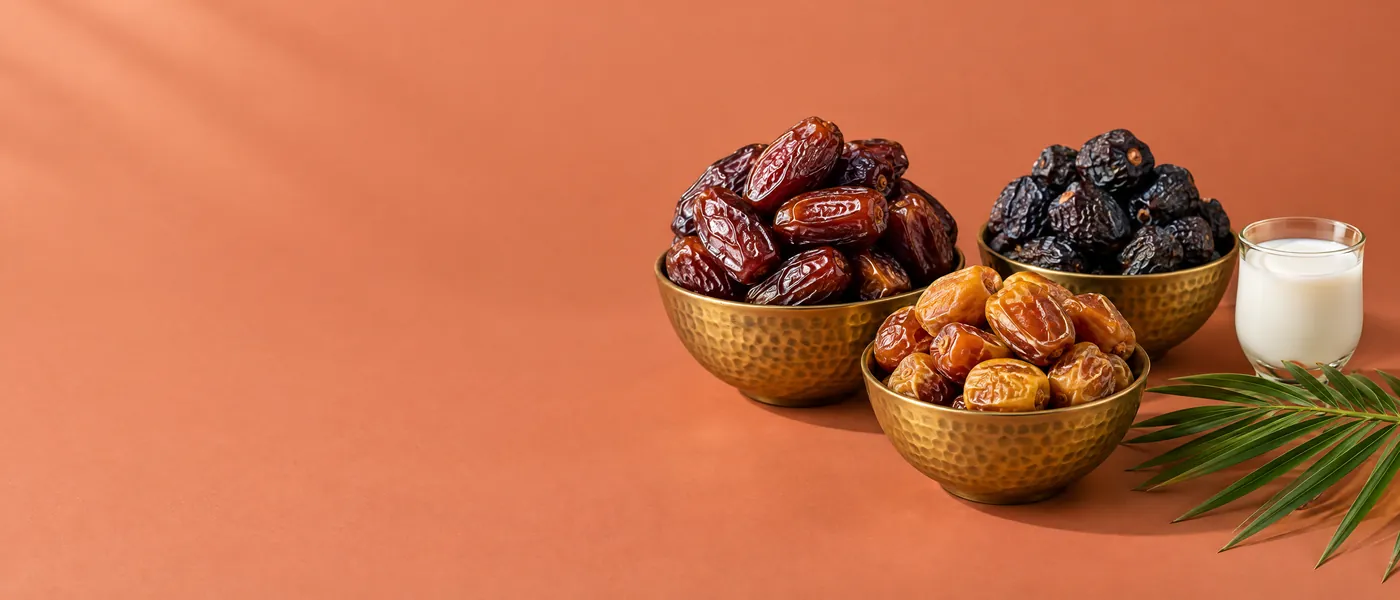
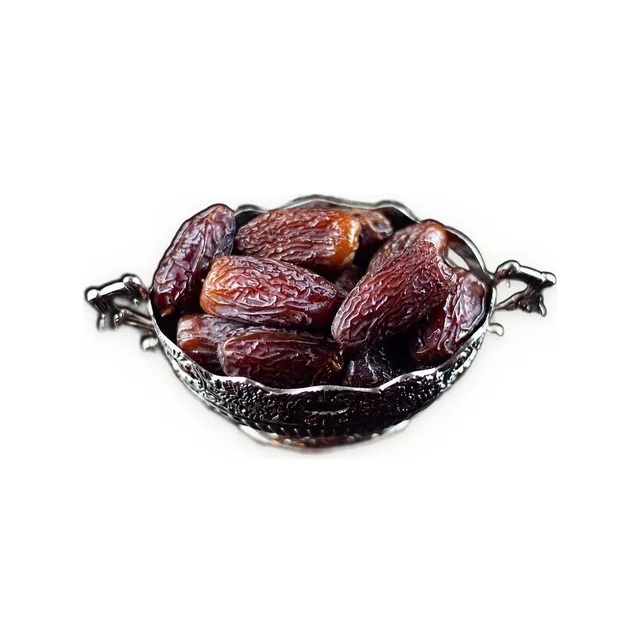
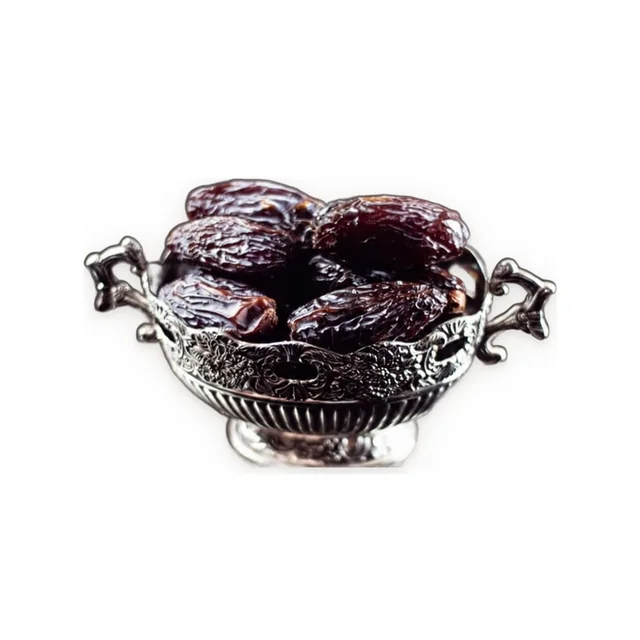
Medjool, the generous one
Medjool, or Mejhoul, was born in Morocco, in the Tafilalet; it is spelled Mejhoul in Morocco and Medjool in most exporting countries. In 1927, while bayoud disease was ravaging Moroccan palm groves, eleven offshoots taken from a single palm in Boudnib were sent to the United States; much of the Medjool grown around the world today descends from them. It is a big date, fleshy and melting, with a taste of caramel and honey, and its flesh comes away easily from the pit: ideal for stuffing. In Morocco, it is often served at ftour, the meal that breaks the Ramadan fast, with a glass of milk. At Maison Fakya, it comes in two sizes, Large Medjool dates and Jumbo Medjool dates; its origin varies from lot to lot, and we will tell you on request.
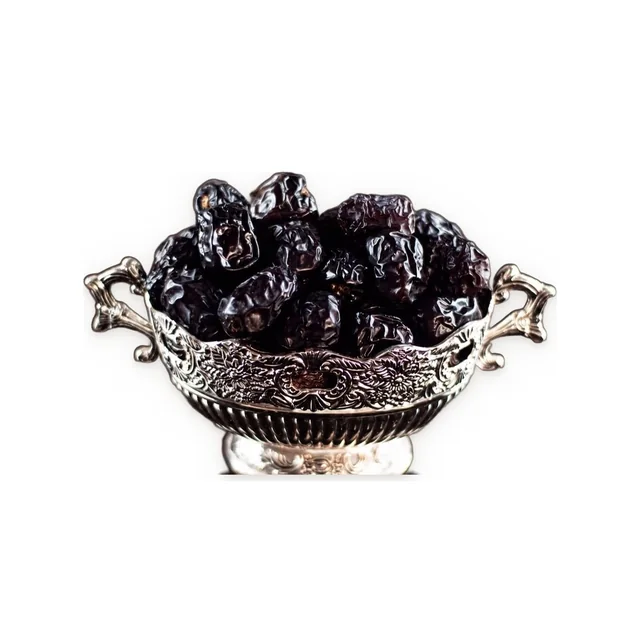
Ajwa, the symbolic one
Ajwa is a variety grown in Medina, in Saudi Arabia. Small to medium and almost black, it has tender flesh and a more discreet sweetness than Medjool. It holds a special place in Muslim tradition: it is often the date people bring back or give on returning from Hajj or Omra. It is savored as is, slowly, rather than cooked, and since it is smaller, there are more to the kilo. See our Ajwa dates.
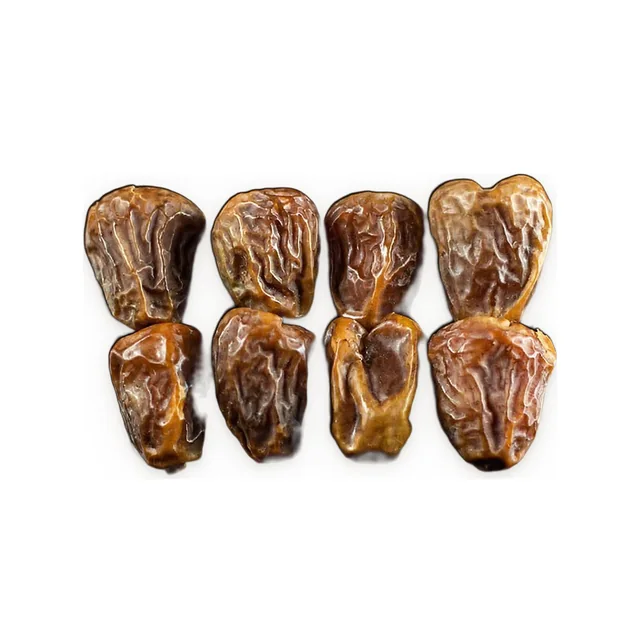
Sukari, for the sweet tooth
Sukari, or Sukkari, comes from the Al-Qassim region of Saudi Arabia, and its name evokes sugar in Arabic. Golden, supple and melting, it is very sweet, with notes of caramel and honey. It is the date for anyone with a sweet tooth, and children often love it; its pronounced sweetness goes very well with black coffee or lightly sweetened tea. Our Sukari dates are served as they are and kept in the fridge, like Medjool.
And branch dates?
Presented on the stem, Tunisian dates on the branch and Algerian dates on the branch are smaller, amber-colored and firmer in texture. This format is typical of Tunisia and Algeria, where Deglet Nour, a translucent golden date, is the best-known variety; ask us about the variety in the current lot. They are set whole in the middle of the table and everyone helps themselves: these are the dates for every day and for big gatherings. The stem itself makes a pretty decoration in the middle of a platter.
Which one for which occasion?
For everyday ftour: large Medjool or branch dates. For hosting: jumbo Medjool, which makes an impression on a platter. As a gift on returning from Hajj or Omra: Ajwa. For the sweet tooth: Sukari. For a corporate Ramadan gift, a selection of jumbo Medjool and Ajwa makes a handsome set. In the kitchen, for date paste, a smoothie or a pastry: pitted Medjool, the easiest to work with. And for the tea table, nothing stops you from mixing a little of each in separate bowls: Sukari and branch dates go very well with roasted almonds.
Storing and serving
Soft dates (Medjool, Ajwa and Sukari) keep in the fridge in an airtight container; branch dates cope better with room temperature, in a cool, dry place. In the freezer, all of them keep even longer and thaw in a few minutes. Take them out fifteen minutes before serving so they get their softness back. For a festive bite, slit a Medjool, remove the pit and slip in a walnut half or an almond. As for quantities, a Medjool weighs 24 g on average without the pit: a kilo holds about 30 to 50, depending on the size grade.
Reading the label
On our product pages, the variety name and the size grade come from the product label. When the origin is not on it, we do not make it up: ask us on WhatsApp, and we will answer for the current lot. And if you are looking for a date for a particular recipe or gift, tell us what it is for: we will point you to the right one.