How much fakya per guest? Our guide in grams
Tea with family, an evening party, an engagement or ftour: benchmarks in grams per person, so you have enough without buying too much. These are common practices, not rules.
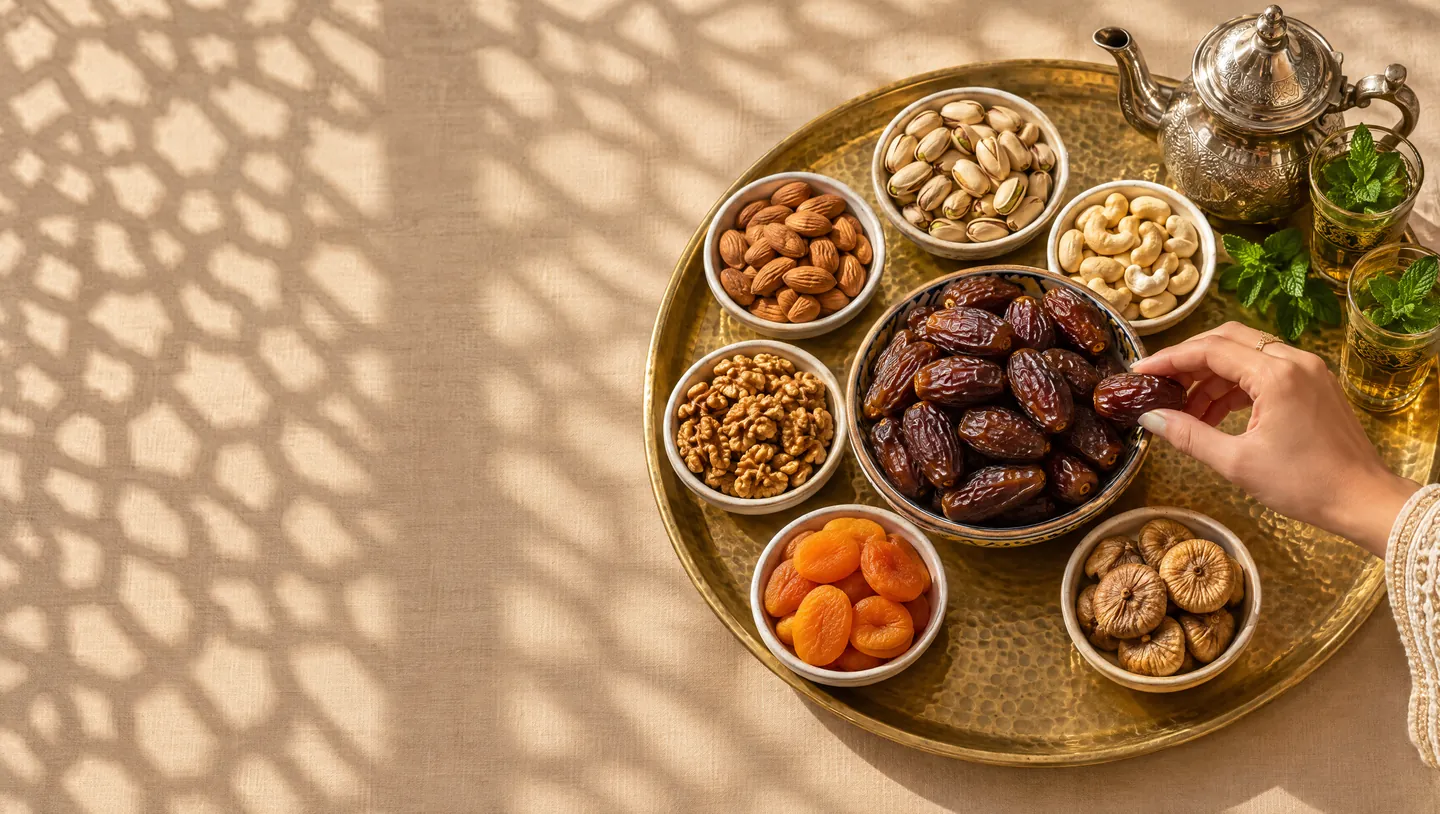
Benchmarks, not rules
There is no standard for fakya: it all depends on the occasion, how long the visit lasts, what else is served and the habits of each household. The figures below are benchmarks commonly used when ordering, designed for a Moroccan table where fakya goes with mint tea; adjust them to your guests. The idea is simple: have enough of everything without ending up with kilos to spare. They cover nuts and dried fruit, not dates, which are better counted one by one.
Occasion by occasion
For tea or a visit of one to two hours, with pastries or other sweets on the table, allow 40 to 60 g per person, plus one or two dates. For an evening where fakya plays the lead role, such as an Achoura evening or a long Ramadan night, plan on 80 to 120 g per person. For a large reception with a meal, such as an engagement or a wedding, where fakya is served on platters alongside the cakes, 30 to 50 g per person is generally enough. At ftour, the meal that breaks the Ramadan fast, allow two to three dates per person. For children, about half. The longer the visit, the closer you get to the top of the range; for a children's afternoon snack, stay at the low end and favor dried fruit.
Four worked examples
Ten guests for tea: 400 to 600 g in total, for example 300 g of nuts and 150 g of dried fruit, with about fifteen dates on the side. Twenty guests for an evening party: 1.6 to 2.4 kg, for example 1.4 kg of nuts, including 400 g of coated almonds, and 700 g of dried fruit, with about thirty dates. Fifty guests at an engagement with dinner: 1.5 to 2.5 kg. A hundred guests at a wedding: 3 to 5 kg of fakya on platters, divided among the tables.
How to split it
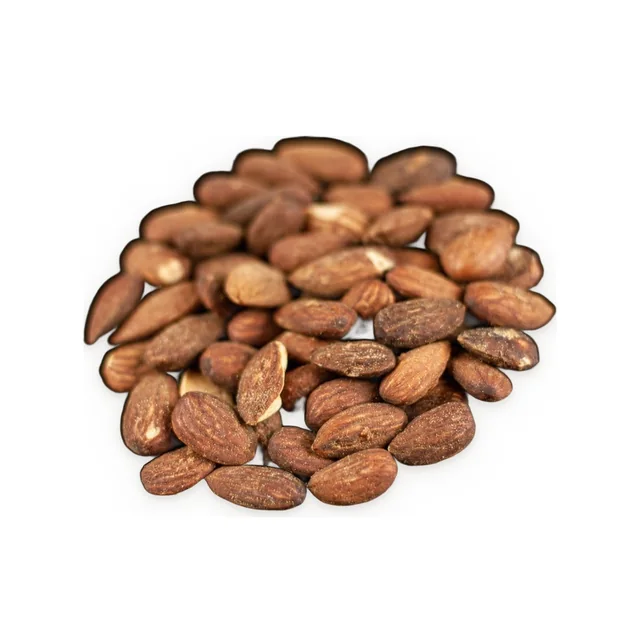
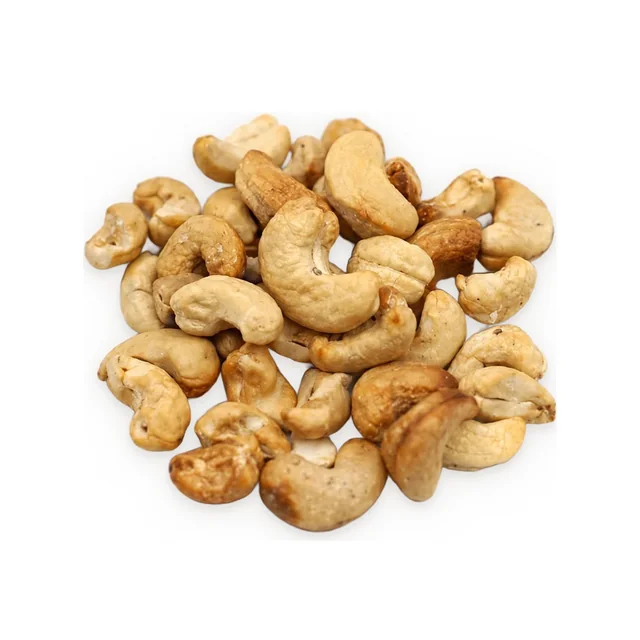
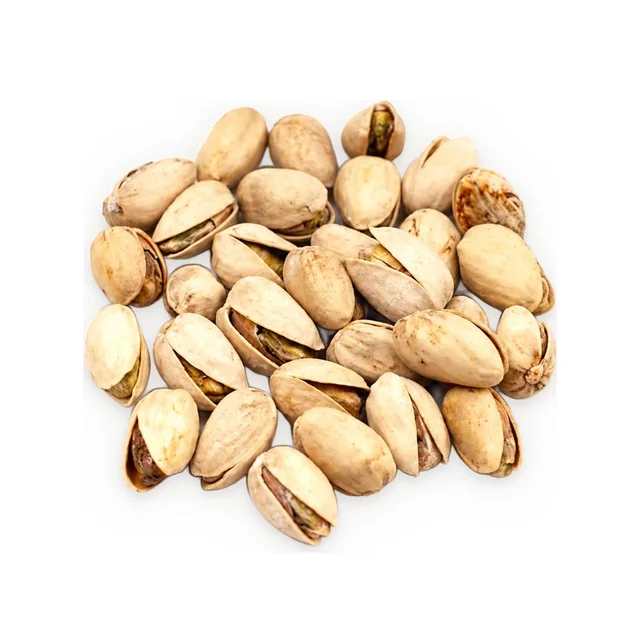
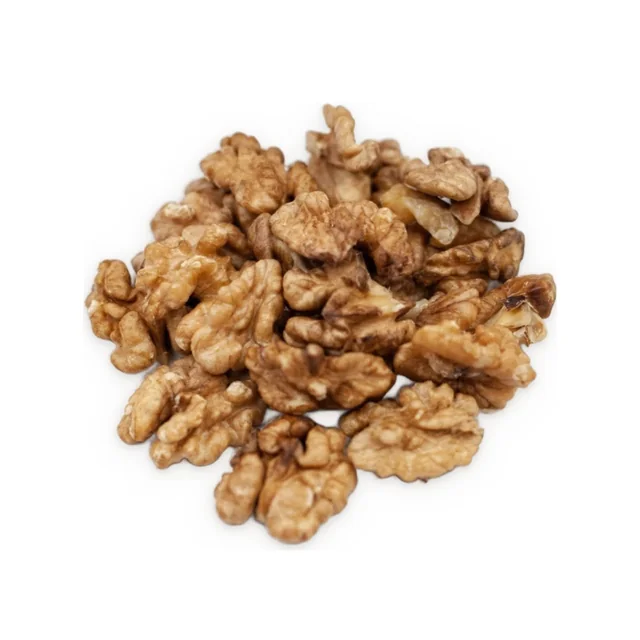
A simple starting point: about two thirds nuts and one third dried fruit. For the nuts, mix the classics (Roasted almonds, Roasted salted cashews, Roasted salted pistachios, Walnut halves) and add a sweet bowl, such as Cinnamon almonds. For the dried fruit, play with colors: Unsweetened dried apricots, Dried mango, Dried kiwi; for a more festive table, a bowl of Dried strawberries catches the eye. Always set out an unsalted bowl, for example Roasted unsalted cashews, for guests who avoid salt, and a small bowl of savory snacks if young people are coming. Finally, keep in mind that in-shell pistachios weigh more for the same amount to eat: the shell accounts for a good part of the weight.
Dates, on their own
Dates are counted one by one. A Medjool weighs 24 g on average without the pit, so a kilo holds roughly 30 to 50 dates depending on the size grade, large or jumbo. Branch dates, which are smaller, come many more to the kilo. For twenty guests at ftour, plan on 40 to 60 dates, or roughly 1 to 2 kg of Medjool. For Ramadan, multiply by the number of evenings: a household of four serves 240 to 360 dates over the month. Take them out of the fridge fifteen minutes before serving, and present them in a separate bowl so they do not stick to the nuts and dried fruit.
A few house tips
Serve in several rounds rather than all at once: the bowls stay beautiful and the rest keeps its crunch in closed bags. For a big celebration, set out the platters at the last moment and keep a reserve in the kitchen to refill them. Allow a 10 to 15% margin for unexpected guests: whatever is not served keeps for weeks in an airtight jar. If you are unsure, send us the number of guests and the occasion on WhatsApp: we will help you estimate the quantities. And keep a few closed bags for guests who leave with a little fakya: a gesture that is always appreciated.